

You do not have to deal with it alone.
It is simple to feel overburdened, nervous, lost, or stuck in a world that moves quickly and necessitates ongoing emotional resilience. Counselling provides a safe, caring environment where you can stop, examine your feelings and ideas, and start the process of finding yourself again.
Contrary to popular belief, counselling is for anyone looking for clarity, emotional healing, or personal development, not just those going through a crisis. Counselling gives you the skills, direction, and emotional support you need to move forward with strength and self-awareness, regardless of whether you are dealing with relationship problems, anxiety, grief, low self-esteem, or just feeling “off.”
A qualified professional (counsellor) works with you in a private setting to address emotional, psychological, or behavioural issues as part of the therapeutic process known as counselling. It focuses on improving self-awareness, handling emotional difficulties, and coming up with workable answers to problems you are facing.
Counselling is about helping you find your own answers in a safe, judgment-free environment, not about fixing you or offering advice. It is a group journey of emotional empowerment and self-discovery.


There are many different reasons why people from all walks of life seek counselling. While some might be coping with particular mental health issues, others might be going through life changes or trying to gain a better understanding of their emotions.
– Counselling is frequently sought for anxiety, stress, or panic attacks.
– Low mood or depression
– Family or relationship disputes
– Loss and grief
– Issues with confidence or low self-esteem
– Work-life stress and burnout
– Recovery from trauma or abuse
– Controlling anger
– Concerns about identity, purpose, or self-worth
– Making decisions or determining one’s course in life can be challenging.
Counselling is a brave step toward understanding and healing, not a sign of weakness.
Counselling sessions can be conducted online or in person, and they usually last 45 to 60 minutes. Getting to know your counsellor, discussing your issues, and deciding on your therapy objectives are typically covered in the first session.
– Examining ideas, feelings, and experiences is one possible activity in a session.
– Recognizing harmful tendencies or limiting assumptions
– Acquiring tools for emotional regulation and coping
– Establishing objectives or intentions for recovery or transformation
– Increasing resilience, acceptance, and self-awareness
Whatever feels right for you, you can talk openly, cry, think, or simply keep quiet. The therapist supports you through it all with empathy and expertise, holding the space without passing judgment.
Different counselling modalities may be used, depending on your needs and the training of the therapist. Every method provides different resources for recovery and development.
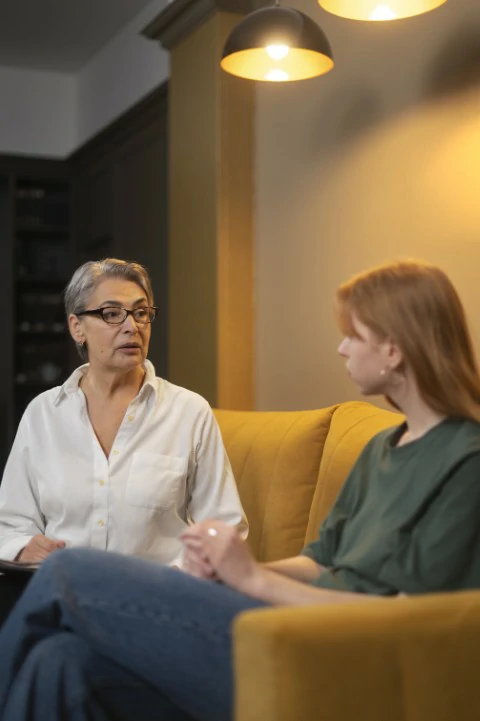
Typical counselling techniques:
– The goal of cognitive behavioural therapy, or CBT, is to alter unfavourable thought and behaviour patterns.
– Person-cantered therapy places a strong emphasis on acceptance, empathy, and the client’s capacity to choose their own course.
– In order to comprehend present behaviour, psychodynamic therapy looks at unconscious patterns and past experiences.
– Solution-focused therapy focuses on identifying strengths and establishing realistic, long-term objectives.
– Trauma-Informed Counselling: Provides people who have suffered abuse or trauma with considerate, secure support.
– In order to lower stress, mindfulness-based counselling combines talk therapy with awareness and meditation practices.
Together, you and your counsellor will determine which strategy or combination of strategies will best aid in your recovery.
Counselling offers many advantages beyond just providing short-term emotional pain relief. Counselling can change your self-perception, interpersonal relationships, and outlook on life with time and dedication.
Emotional and Psychological Advantages:
– Improved self-awareness and emotional intelligence
– Alleviation of symptoms of depression, stress, or anxiety
– Increased self-control and emotional fortitude
– Recovering from unresolved grief or past trauma
– Enhanced optimism, happiness, and mental clarity

– Improved interpersonal and communication abilities
– Relationships with better dispute resolution
– Improved ability to make decisions and solve problems
– Better work-life balance
– Getting back in touch with one’s values and objectives
Everyone. Teens, adults, couples, parents, caregivers, and professionals can all benefit from counselling. Counselling can be a tool for emotional clarity, spiritual development, or self-growth, so you don’t have to be in crisis to get help.
It is particularly beneficial for:
– Students who are subjected to peer or academic pressure
– Professionals coping with imposter syndrome or burnout
– Parents in need of assistance with relationship dynamics or parenting
– People recovering from identity issues, job loss, or breakups
Counselling provides a safe space to work through the many facets of contemporary life with a trained companion who is impartial and non-partisan.
Everybody. Teenagers, adults, couples, parents, caregivers, and professionals can all benefit from counselling. Counselling is a tool for self-improvement, spiritual development, and emotional clarity, so you don’t have to be in crisis to get help.
It’s particularly beneficial for:
– Peer or academic pressure on students
– Professionals who suffer from imposter syndrome or burnout
– Parents who require assistance with relationship dynamics or parenting
– People getting over identity issues, job loss, or breakups
With someone who is trained to walk beside you without bias or agenda, counseling provides a safe space to process the many facets of contemporary life.

Indeed, one of the main tenets of counselling is confidentiality. Unless there are uncommon legal or safety-related exceptions (such as a risk of harm to oneself or others), what you disclose to your counsellor is protected and kept private. This creates a space where you can speak openly without fear of judgment, breach, or exposure
The “right” time to begin counselling does not exist. But it might be particularly advantageous if:
– You feel stuck or emotionally overburdened.
– Your relationships are tense or constantly tense.
– You frequently feel depressed, anxious, or agitated.
– You’re getting over a loss or trauma.
– You wish to develop spiritually or emotionally.
– You just want a place where you can talk and think without fear.
Although it may be difficult, taking the first step is frequently the most effective one.
A space where you can feel heard, understood, and supported without passing judgment is what counselling is a gift you give to yourself. It serves as a reminder that you are not alone, that your suffering is real, and that things can change.
Counselling can help you find inner clarity, peace, and empowerment, regardless of whether you are at a breaking point or just looking for a deeper meaning.
You are worthy of feeling complete. You are deserving of assistance. You are worthy of recovery.