
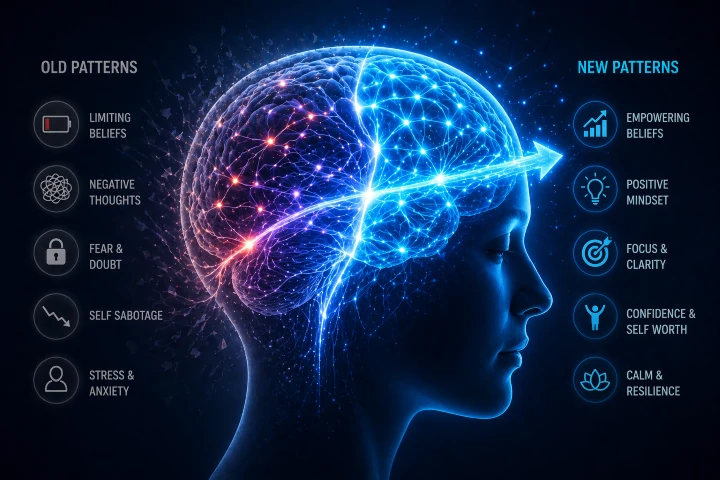
Have you ever questioned how two people can have the same experience and emerge with entirely different attitudes, feelings, and outcomes? NLP (Neuro-Linguistic Programming) is a revolutionary technique that helps us understand the inner workings of the mind and change the way we think, speak, and act.
NLP is the mind’s toolkit, enabling you to comprehend and modify your internal programming to better achieve your objectives. NLP offers the techniques to help you overcome limiting beliefs, improve your communication skills, break bad habits, or just feel more in control of your life.
NLP teaches you how to use the language of the brain to achieve long-lasting personal transformation, and it is used by therapists, coaches, business leaders, athletes, and regular people. Unlocking your full potential, one thought pattern at a time, is more important than repairing what is broken.
A psychological method called neuro-linguistic programming investigates the relationship between language (linguistic), our brain (neuro), and behavioural patterns (programming). Dr. John Grinder, a linguist, and Richard Bandler, a psychologist and computer programmer, co-created it in the 1970s. Their objective was to examine the mental processes and communication philosophies of effective communicators and therapists in order to develop a model that others could use to achieve comparable outcomes.
Understanding how people organize their subjective perception of the world and how this internal organization influences their feelings, choices, and behaviours is at the heart of natural language processing (NLP). We can make significant adjustments to bring our thoughts into line with our actual desires once we comprehend this internal blueprint.
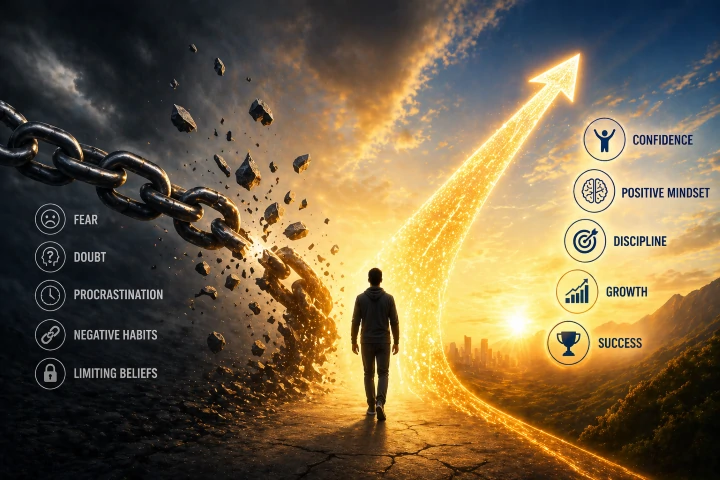
NLP provides a variety of methods to help people recognize and purposefully alter their subconscious programming. This is how it usually operates:
Finding the Present Pattern
We start by examining the ideas, convictions, or communication patterns that might be causing undesirable results, like fear, putting things off, self-doubt, or bad habits.
Breaking the Rhythm
NLP employs specialized tools to interrupt and break the current loop after identifying the pattern. This could entail rephrasing how an experience is recalled, altering internal dialogue, or changing visualizations.
Setting Up a New Pattern
The last step is to swap out the outdated pattern for one that is more empowering or resourceful. This could be a different reaction to triggers, a more useful belief, or a new way of thinking.
NLP is very experiential; it focuses more on bringing about change in real time than it does on problem analysis.

Thousands of lives have been changed by the following popular NLP techniques:
– Establishing a mental or physical “trigger” (such as a hand gesture) that immediately elicits a positive emotional state is known as anchoring.
– Swish Pattern: Changing a pessimistic thought to one that gives you more confidence to overcome fears or bad habits.
– Reframing is the process of altering your emotional reaction by changing the meaning of a situation or belief.
– Meta Model: Using limiting or ambiguous language to help elucidate ideas and reveal fundamental principles.
– Mirroring and matching: Establishing rapport by gently emulating the tone and body language of the other person.
Each method is predicated on the notion that minor changes in language and thought can have a significant impact on life outcomes.
NLP has a wide range of applications across fields because it works with universal human processes thoughts, language, and behaviours. Among the most typical locations are:
– Mental Health & Therapy: To get over limiting beliefs, trauma, phobias, and anxiety.
– Coaching & Personal Development: For boosting confidence, motivation, and clarity.
– Sales & Business: To improve leadership, persuasion, and communication.
– Education & Learning: To improve memory, focus, and learning strategies.
– Sports Performance: To cultivate a winning mindset and break performance blocks.
For anyone who feels “stuck,” whether in relationships, their career, or their sense of self-worth, NLP is also immensely beneficial. It equips you with the means to take charge of your inner world in order to influence the outside world.
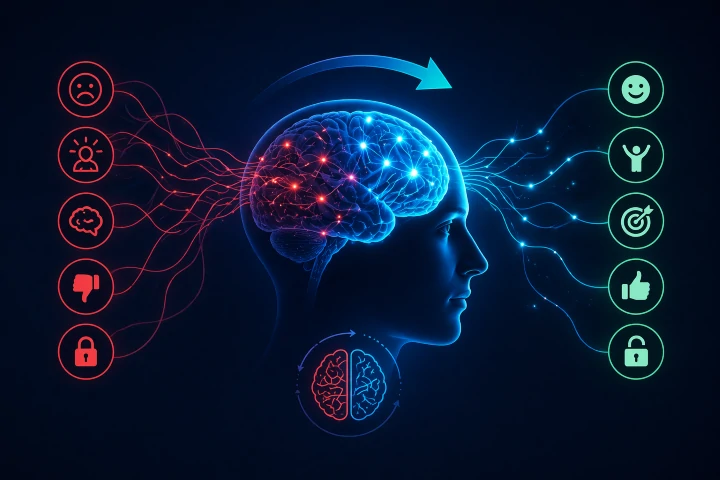
Over the years, NLP has come under fire for its lack of scientific validation, mainly due to its emphasis on results rather than theory. However, the power of neuroplasticity the brain’s capacity to change is still being highlighted by innumerable anecdotal success stories as well as expanding behavioural psychology and neuroscience research.
NLP is regarded as a very powerful transformational tool, even though it might not be classified as a traditional therapy. This is particularly true when applied by qualified professionals or combined with coaching and counselling techniques.
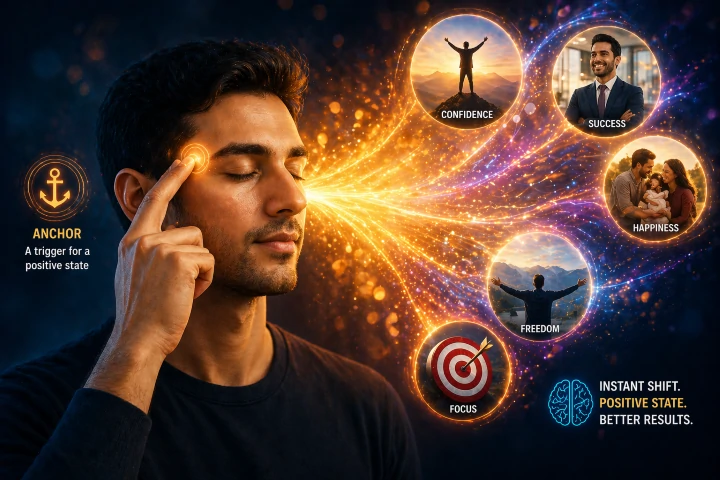
NLP’s speed and usefulness are what really set it apart. You don’t have to spend months in therapy or go over every unpleasant memory again. When used properly, NLP enables you to:
– Rapidly alter emotional responses
– Boost communication at work and in relationships.
– Overcome mental obstacles
– Gain clarity and laser-like focus.
– Convert limiting ideas into empowering ones.
It’s a self-mastery toolkit that will help you gain a better understanding of how your mind functions and learn how to consciously manage your thoughts, feelings, and actions.
Although NLP is not magic, it frequently seems that way. It demonstrates that the smallest mental adjustments lead to the largest life changes. Everything changes when you develop better mental skills, including your feelings, actions, and the things you draw into your life.
NLP gives you the ability to communicate in the language that your brain can comprehend, allowing you to take control of your own destiny.