
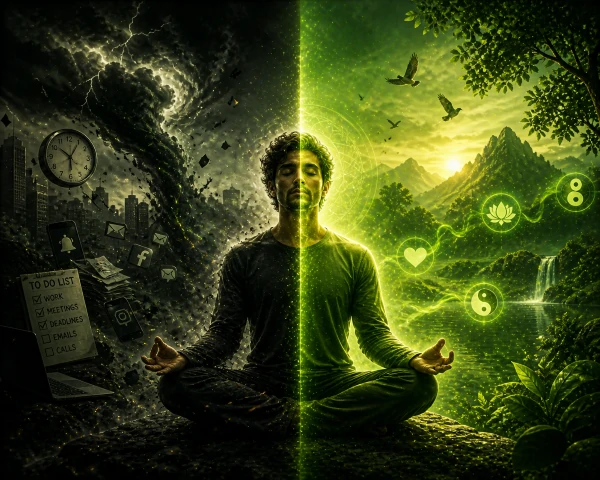
True silence has become a rare gem in a world where screens, noise, and never-ending to-do lists permeate every aspect of our lives. However, there is a source of inner strength, serenity, and clarity concealed within that silence. Meditation is an invitation to reconnect with yourself, not just a routine.
Sitting in quiet awareness, letting thoughts come and go without holding on, and letting the mind settle like calm water after a storm is the art of this practice. Meditation has been used for centuries by sages, healers, and seekers to develop focus, balance, and a strong sense of connection to life. It is now a widely accepted practice that promotes mental health, emotional stability, and general well-being in addition to spiritual development.
Fundamentally, meditation is a mental practice that focuses the mind, frequently through the use of methods like mindfulness, breath awareness, visualization, or chanting. It can be used for anything from spiritual awakening to emotional healing and stress reduction.
The goal of meditation is to observe thoughts objectively and recognize that they don’t have to rule you, not to completely stop them. It gradually frees up mental space so you can react to life rather than react to it.

1. Mindfulness Meditation
Mindfulness meditation, which has its roots in Buddhist traditions, entails remaining in the present and objectively observing one’s thoughts, feelings, and experiences.
– Pay attention to your breathing or your body’s feelings.
– Increases present-moment awareness and acceptance.
2. Meditation Under Guidance
The practitioner is guided through calming scenarios and visualizations by an instructor or audio guide.
– Perfect for novices.
– Promotes calmness, emotional recovery, and the development of a positive outlook.
3. Transcendental Meditation (TM)
3. This technique involves repeating a personal mantra in silence in order to go beyond typical thought patterns.
– Incredibly soothing and healing.
– Twice a day for 20 minutes of practice.
4. Kindness and Loving
The goal of meditation (Metta) is to develop kindness and compassion, first for oneself and then for others.
– Promotes empathy and emotional recovery.
– Lessens resentment and anger.
5. Meditation Using Body Scan
gently moving focus to various body parts while observing tension and sensations.
– Relieves physical tension.
– Enhances the mind-body connection.
6. Zen Meditation (Zazen)
Zen Buddhism’s seated meditation, which emphasizes posture and breathing while allowing thoughts to flow naturally.
– Promotes simplicity and self-control.
– Strives for profound inner awareness.
1. Mental and Emotional Advantages of Meditation
– Lessens anxiety and tension.
– Enhances mental clarity, memory, and focus.
– Promotes resilience and emotional stability.
2. Health Advantages
– Reduces heart rate and blood pressure.
– Enhances the quality of sleep.
– Boosts the immune system.
3. Spiritual Advantages
– Encourages inner peace and self-awareness.
– Encourages a closer bond with one’s principles and goals.
– Increases empathy for all living things.
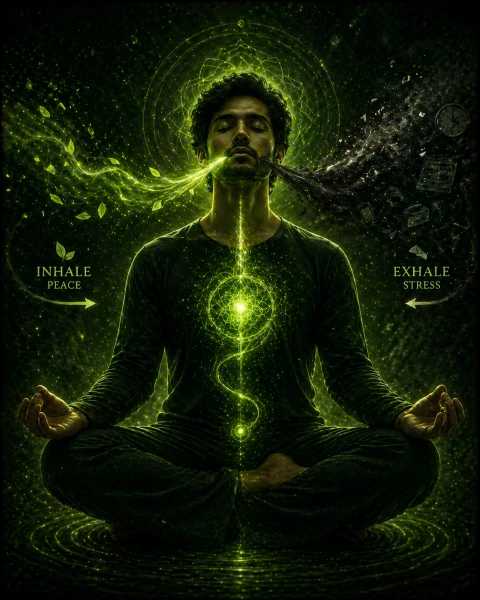
– Locate a Calm Area Select a location that is distraction-free.
– Use a chair, cushion, or mat to sit comfortably. Maintain a relaxed but straight back.
– Pay attention to your breath and gently follow each inhalation and exhalation.
– Observe Without Judgment: Do not hold on to your thoughts; instead, let them drift by like clouds.
– Start Small: Increase your daily time gradually, starting with 5 to 10 minutes.
– Be Consistent: Deeper benefits come from consistent practice.
Myth: You have to clear your mind entirely.
Truth: The objective is to observe thoughts objectively rather than to cease thinking.
Myth: Only those who are spiritual can meditate.
Truth: Anyone can practice, and it’s a tool for mental, physical, and emotional well-being.
Myth: Meditation takes hours.
Truth: Even a small amount of time each day can make a big difference.
The goal of meditation is to learn to live fully in the world, not to escape it. It’s about finding calm in the midst of life’s chaos, not just in peaceful spaces. It serves as a gentle reminder that peace has always existed within you and is not something you have to look for.
Meditation is ultimately a journey of self-discovery. You get closer to realizing that you already possess the serenity, strength, and clarity you seek with each mindful breath. Just take a moment to listen.